Tim Robertson: Real-life experiences improve oil spill response

Volunteer Spotlight

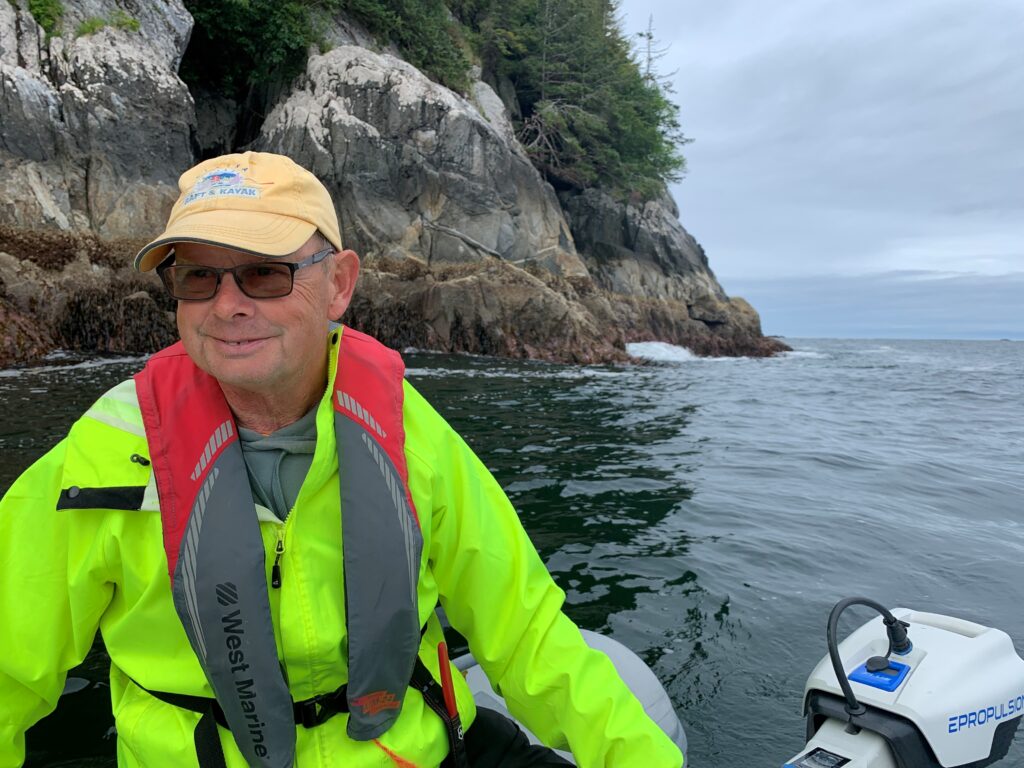
Photo of Tim Robertson on a small motorized boat on the ocean with a rocky coast in the background.
Tim Robertson is a member of the Council’s Oil Spill Prevention & Response Committee. The committee works to minimize the risk and impacts associated with oil transportation through research, advice, and recommendations for strong and effective spill prevention and response measures, contingency planning, and regulations.

Growing up in western North Carolina, over 3,000 miles away from Alaska, Tim Robertson and his brothers Roy and Andy knew all about the 49th state. His dad was obsessed.

“If there was a TV show or a movie or anything about Alaska, he drug the whole family to see it,” Robertson says. All three brothers ended up moving here.

These days Tim splits his time between Alaska and Hawaii. At first glance, it might seem like the two states are very different, but Tim’s values are present in both.

“I’m a small-boat guy on big water,” he says. “There’s the same connection with the ocean. A lot of mornings I watch the sun rise from the water. It’s a big part of what I am.”

Robertson spent his first few years in Alaska working in an oil-related field, first as a research biologist for Alaska Department of Fish and Game, then for an oil field service company.

He dreamt of a different career though. Robertson acquired land in Seldovia in 1985, and partnered with another family to build Harmony Point Wilderness Lodge, an ecotourism business. They had only been in business a few short years when the Exxon Valdez ran aground.

“The first time I ever heard of ICS [Incident Command System] was when we had a community meeting after the spill,” says Robertson.

Read more

Fishing for answers: Geneticist using DNA to decode Alaska salmon’s family ties

Wei Cheng is a member of the Council’s Scientific Advisory Committee. The committee is made up of scientists and citizens working to promote the environmentally safe operations of the terminal and tankers through independent scientific research, environmental monitoring, and review of scientific work.

Volunteer Spotlight: Wei Cheng

Wei Cheng says she is happy and fortunate to be able to use her expertise in genetics to help protect Alaska’s salmon.

At her job with the Alaska Department of Fish and Game, or ADF&G, she analyzes genetic changes in fish to map the relationships among populations of salmon and other species of fish. The information she gains helps fisheries managers make decisions protect the integrity of wild populations of fish species.

Cheng is surprised at how much she enjoys the work. “To be honest, I was not interested in fisheries at all at the beginning,” she laughs.

Before coming to the United States from China, she graduated from medical school. Her area of interest was in human genetics and diseases, so she moved to Pittsburgh for graduate work in molecular biology at Duquesne University.

After graduation, her husband’s work brought them to Juneau.

“In Alaska we don’t have medical schools, pharmaceutical companies, or medical research labs,” Cheng says about her search for a job.

But she got lucky. The National Oceanic and Atmospheric Administration’s Auke Bay Laboratories reeled her in to help with studies using genetic analysis.

“That’s where I started working in fisheries.”

Cheng and her family eventually ended up in Anchorage, where she now works at ADF&G’s Gene Conservation Laboratory.

She has studied the population structure of pink salmon in Prince William Sound This study is the initial step to examine the interactions of wild and hatchery pink salmon in the area.

Salmon tend to spawn in the streams and rivers where they were born. But Cheng says sometimes they stray.

Read more

Trent Dodson: Bait the education hook early to reel in later learners

Volunteer Spotlight

Trent Dodson

In college, Trent Dodson was most fascinated in his biology classes. He tells a story of one of his professors, a parasitologist, who took the class out to a stream to look for snails. Dodson was hooked. He went on to take classes on insects and other critters, eventually settling on ichthyology, the study of fish.

After graduating, he taught school for a year. But it wasn’t for him, and he decided to look for something different. That search brought him to Alaska in 2001.

“I came up to work a summer job for Cook Inlet Aquaculture Association,” he says. In the fall, they asked him to stay on. Dodson has been an Alaskan ever since.

Read more

Skip to content