The federal and state group that plans oil-spill response and cleanup in Alaska waters has proposed changes that would dismantle a vital tool for public involvement in that process.
The group in question is the Alaska Regional Response Team. This group is made up of 15 different federal and state agencies, and is chaired by the U.S. Coast Guard and the Environmental Protection Agency. The Department of Environmental Conservation is the primary representative for the State of Alaska.
Changing it as proposed would weaken, not strengthen, oil-spill response in Alaska waters. It’s a bad idea and we urge the Response Team to withdraw the proposal and rework it as needed with help from this citizens organization and other concerned stakeholders.
The tool the Response Team wants to dismantle is the Regional Stakeholder Committee. It includes our group and many others with much to lose if Alaskans should suffer another spill on the scale of the Exxon Valdez. The proposed change would replace the Stakeholder Committee with two smaller, weaker groups that would be far less effective, possibly to the point of near-irrelevance.
 Colin Daugherty’s accent quickly gives him away as a native Chicagoan.
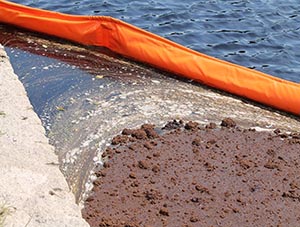 A group of oil spill preparedness planners in Prince William Sound are working together to develop an improved method of training for oil spills. The council has been working for many years to find a suitable oil “surrogate” for spill response training. Surrogates are floating substances such as wood chips, peat moss, or other materials that would mimic an oil slick and have similar interactions with currents, tides, and winds, without harming the environment. A surrogate would provide a target for responders during training and exercises; something which physically interacts with boom and equipment and acts as a visual aid to help responders increase proficiency with gear and tactics.