Since 1999, the Chugach Regional Resources Commission, or CRRC, has been hosting the Annual Subsistence Memorial Gathering. This event, held near the anniversary of the Exxon Valdez oil spill, honors the resilience and adaptation of the people of the Chugach region after the disaster.
This year, the Council partnered with CRRC and Alaska Sea Grant to host a workshop during the Gathering to share with community members about current environmental and social science research in the Chugach region. An important goal was to hear ideas from community members about current and future project needs based on their experiences and local knowledge. In addition to the co-hosts, researchers from Alaska Pacific University, Seldovia Village Tribe, Fjord & Fish Sciences, Prince William Sound Science Center, University of Alaska Fairbanks, Kodiak Area Native Association, CRRC, and Kachemak Bay National Estuarine Research Reserve shared brief updates about their work. During morning and afternoon sessions, participants gathered in roundtable discussions. They were encouraged to consider how the research presented could be integrated into communities; what environmental or social science was needed in communities; ways to promote better community well-being through resilience and adaptation; and to share stories of change in the region.
Lessons from listening
 One of the Council’s goals was to learn about research needs from community members. Discussion questions were designed to encourage stories about changes in their local environment. The Council hopes to be able to develop future projects in collaboration with communities based on this feedback and knowledge sharing.
A variety of key themes and lessons emerged from the conversations.
Communities encourage research that directly addresses local needs. People want to know more about what is happening in their environment and why. Many attendees told stories of how shifting seasons and climate change are affecting harvests of land and marine plants and animals. The variety of species available for harvest is also declining in some areas. Locally important species such as clams, herring, and salmon were of particular interest, and people also wanted to know how the health of plankton populations affects the rest of the food web.
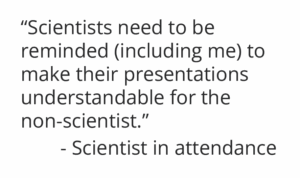
Communication is key. Researchers tend to talk about their work in technical language and present their work in complicated spreadsheets filled with specialized data. These are not easy for non-scientists to understand or apply to their lives. The conversations during the workshop showed that people were interested in the research and wanted to know how to learn about these projects. Plain language and visual graphics can help improve communication.
Local knowledge holds important insight. Two-way communication also benefits researchers. People living in coastal communities notice changes before anyone else. They are the first to notice poor fishing, changes in harvestable species, and other factors that directly affect coastal communities and local ways of living. Listening to communities’ questions and observations can help shape the development and execution of research projects.
Keep showing up. Consistency is important in building relationships. Community members stressed the value of researchers returning to share project results and engaging youth in outreach and education as projects unfold.
More details in the report
The full report contains many more details, including ideas for projects and additional suggestions for building relationships with communities: 23rd Annual Subsistence Memorial Gathering Workshop