Personal stories preserved in University of Alaska Fairbanks’ oral history archives
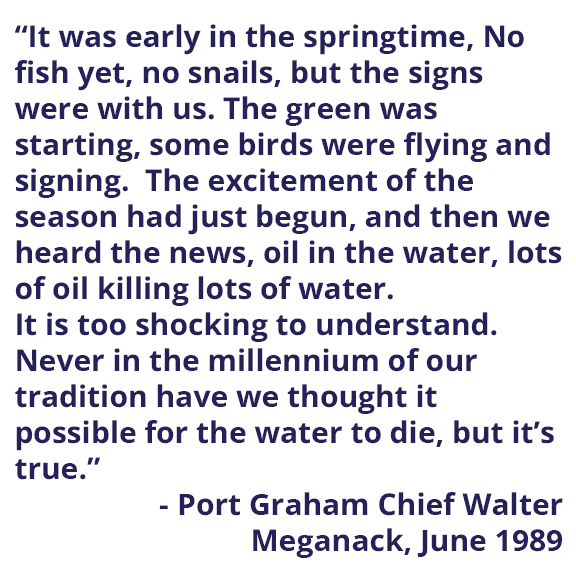 Twenty-five years after the Exxon Valdez disaster, the voices of local citizens were preserved as part of the Oral History Program at the University of Alaska Fairbanks.
The university’s archive of stories about Alaska, known as “Project Jukebox,” preserves audio and video recordings related to aspects of Alaska’s history and its people.
In 2014, the Council partnered with the university to create an Exxon Valdez oil spill portion of the archive. Funding was provided by the Council as well as a generous contribution from the Institute of Museum and Library Services.
Available on UAF’s website: Exxon Valdez Project Jukebox
Oral History
Oral history projects change the way we look at an event. The Exxon Valdez oil spill oral history project will help us broaden our understanding of this tragic incident by incorporating the voices of those who lived throughout that long-standing turmoil.
This emotionally driven exhibit provides a comprehensive picture of the oil spill by outlining the consequences of the spill from those who experienced the effects first-hand. The narrators’ experiences provide a unique perspective that helps us understand the diverse effects of technological disasters.
The project tells the stories of an assortment of people including children, fishermen, clean-up workers, industry representatives, and political activists.
Recordings come from a variety of sources including:
- Videos recorded specifically for the project in 2014
- Audio recordings of interviews for the Council commissioned book “The Spill: Personal Stories of the Exxon Valdez Disaster”
- Historical videos from the Exxon Valdez oil spill collection at Alaska Resources Library and Information Services.
These diverse perspectives allows for a more complete interpretation of the spill. The project is available on UAF’s website: Exxon Valdez Project Jukebox