State of Alaska’s oil spill prevention and response funding unsustainable

Council voices support for full funding

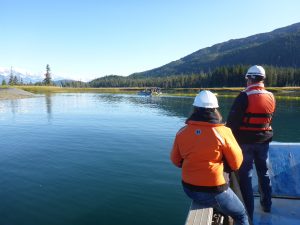
Photo of Representatives from the Alaska Department of Environmental Conservation and SERVS observing an oil spill exercise in Prince William Sound.
Representatives from the Alaska Department of Environmental Conservation and SERVS observe an oil spill exercise in Prince William Sound.

The State of Alaska’s Oil and Hazardous Substances Release Prevention and Response Fund is in trouble. Funding for the prevention of spills is projected to be in a deficit by 2025.

Reduced pipeline flow contributes to shortfall

The amount of money going into the accounts ebbs and flows according to how many barrels flow through the pipeline. The amount of oil, which peaked in 1988 at 2.1 million barrels a day, has slowed considerably over the years and is now averaging just over 500,000 barrels a day. The revenues from the .95 cent surcharge on refined fuels were also originally overestimated. These factors, combined with lack of adjustment for inflation, have all resulted in the shortfall.

Response account used for contaminations other than oil and gas

Read more

New law means sustainable funds for spill prevention and response in Alaska

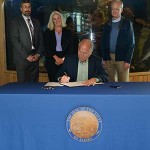
Right: Governor Walker signs the law, witnessed by council staff member Steve Rothchild; the bill’s sponsor, Rep. Cathy Munoz of Juneau; and Alaska Department of Environmental Conservation’s Commissioner Larry Hartig. Photo courtesy of the office of Governor Walker.
Governor Walker signs the law, witnessed by council staff member Steve Rothchild; the bill’s sponsor, Rep. Cathy Munoz of Juneau; and Alaska Department of Environmental Conservation’s Commissioner Larry Hartig. Photo courtesy of the office of Governor Walker.

A new refined fuel products tax to fund Alaska Department of Environmental Conservation’s Spill Prevention and Response division was signed into law by Governor Walker on June 27.

The division had been facing a significant funding shortfall for some time as previous funding came solely from a per-barrel charge on crude oil produced in the state. Declining oil production meant decreasing funds.

Read more

State spill prevention and response division prevails in fight for funding

By Steve Rothchild
Administrative Deputy Director

The Alaska Department of Environmental Conservation’s division of Spill Prevention and Response, often referred to by the acronym “SPAR,” has been facing a significant funding shortfall for some time due to declining oil production. The division works to prevent, prepare and respond to spills of oil and hazardous substances as well as oversee the cleanup of contaminated sites. Their work includes facility inspections, contingency plan review and approval, drills and exercises and site monitoring.

In the 1980s, the State legislature instituted a per barrel surcharge on crude oil to provide funding for the division. Unfortunately, when originally enacted, there was no inflation protection in the bill and production has declined.

Running out of money

This year, without inflation protection or another funding source, the crude oil surcharge became inadequate to support SPAR’s work, necessitating staff reductions and other cost savings. Starting in early 2014, department personnel provided projections to both the House and Senate showing the decrease of funds due to lower oil production. SPAR has been relying on large oil spill settlements and penalties to address the shortfall for several years but those are now spent. This year, SPAR reduced expenses by combining the planning and prevention program with the prevention and response program, reducing personnel, and more actively pursued cost reimbursement, however the shortfall was projected to be $7 million annually. Without a fix to funding, essential services would cease and SPAR would have to reduce personnel by approximately 40 percent.

Read more
Resolution 15-03: Urging expeditious action by the Governor of Alaska and the Alaska Legislature to amend the existing State Oil and Hazardous Substances Release Prevention and Response Fund

Urging expeditious action by the Governor of Alaska and the Alaska Legislature to amend the existing State Oil and Hazardous Substances Release Prevention and Response Fund funding mechanisms and, as may be necessary, to establish requisite ancillary funding mechanisms to support and sustain an adequately robust oil and hazardous substances release prevention and response program. … Read more

Skip to content