
How has subsistence harvest changed over time in the Exxon Valdez oil spill region?

Image of the word subsistence, which is defined in the image caption.
A way of life that includes the harvest and use of wild resources for food, raw materials, and other traditional uses. Subsistence has been a central part of the customs and traditions of many cultural groups in Alaska for centuries. Download the report: Recovery Of A Subsistence Way Of Life (PDF) or the report summary: Study Overview – Recovery Of A Subsistence Way Of Life (PDF)

The Exxon Valdez oil spill changed the harvest and use of wild resources in Southcentral Alaska. Various anecdotal reasons such as concerns about oil contamination meant folks were hesitant to use these traditional resources.

The Council recently partnered with the Alaska Department of Fish and Game’s Division of Subsistence to study and document why and how the spill affected subsistence harvesting activities, both immediately after the spill and in the years since.

Fish and Game researchers analyzed data collected from the communities of Cordova, Chenega, Tatitlek, Port Graham, and Nanwalek from 1984 to 2014.

That data confirmed that harvesting decreased during the first few years after the spill, but numbers started recovering around two to three years after the spill. Overall, the rates increased steadily through the 1990s and into the 2000s. By 2014, however, two important facts became apparent.
Read more

Science Night 2019

On December 5, the Council hosted Science Night, an evening to hear about the latest research affecting the safe transportation of oil through Prince William Sound. This annual event is an initiative of the Council’s Scientific Advisory Committee. SAC, as it’s known, ensures Council projects are based on the best scientific practices available.

Read more

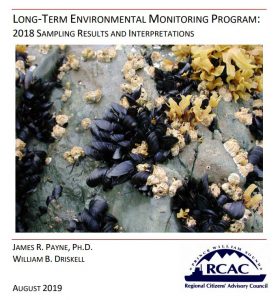
Long-term monitoring in Prince William Sound shows lowest contamination levels in study’s history

Results from the Council’s efforts to monitor the long-term environmental impacts of the operation of Alyeska Pipeline Service Company’s Valdez Marine Terminal and associated tankers since the Exxon Valdez oil spill have shown oil contamination in Prince William Sound and the Gulf of Alaska has reached all-time low values. The Council has been conducting environmental monitoring since 1993.

Alyeska and its owner companies have implemented several improvements over the years which have contributed to the reduction of pollutants being discharged. These include the elimination of single-hulled tankers and Alyeska’s ability to effectively operate their Ballast Water Treatment Facility which removes oil contamination from tanker ballast water.

Read more

Skip to content