Researchers cautiously optimistic about increase in young herring

A new study hints that the herring population in Prince William Sound could be on the rise. In the early 1990s, the numbers of herring declined drastically, destroying a healthy fishery. The reason for that crash has never been confirmed, though the Exxon Valdez oil spill is considered a contributing factor. Since then, the herring … Read more

Fishing for answers: Geneticist using DNA to decode Alaska salmon’s family ties

Wei Cheng is a member of the Council’s Scientific Advisory Committee. The committee is made up of scientists and citizens working to promote the environmentally safe operations of the terminal and tankers through independent scientific research, environmental monitoring, and review of scientific work.

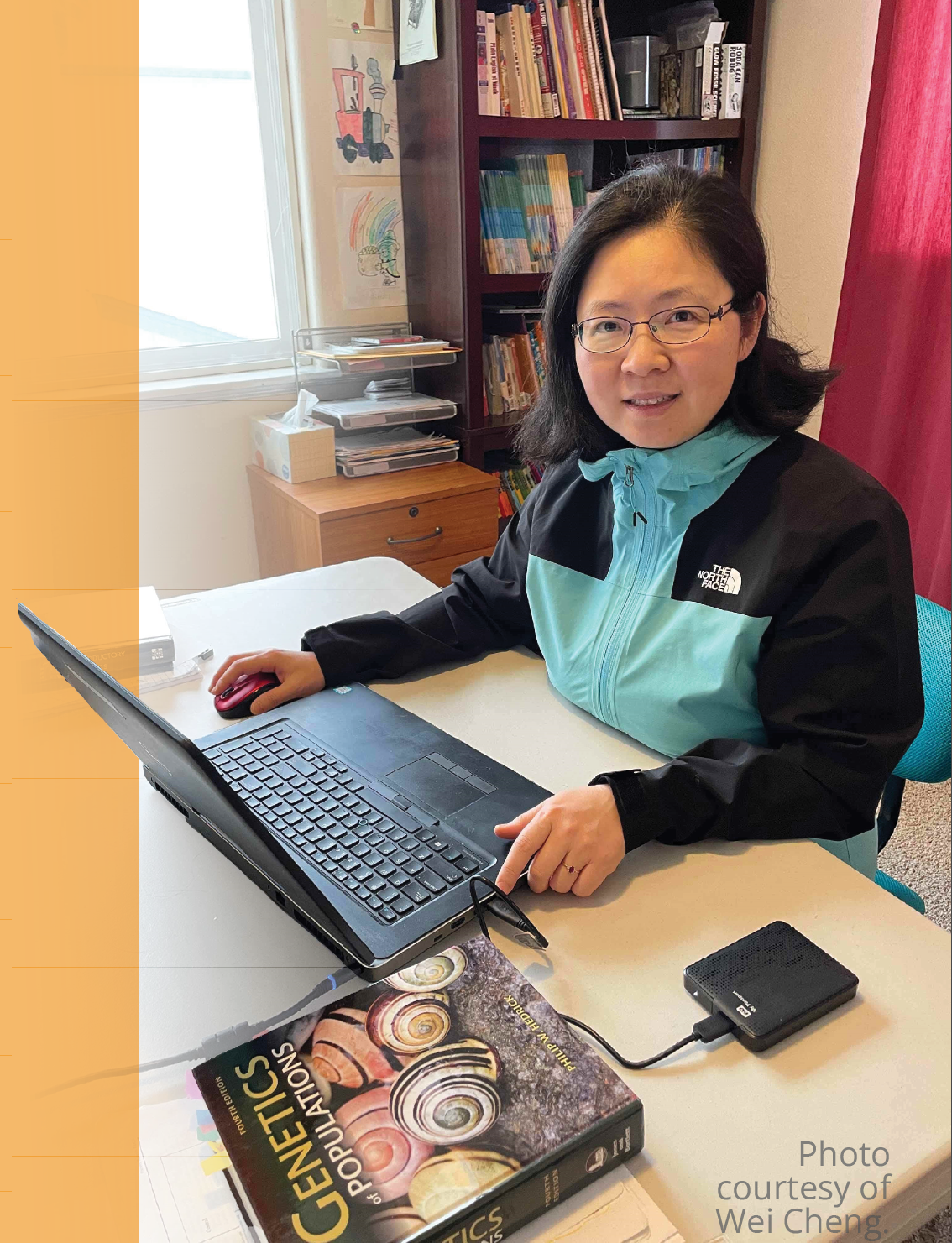
Volunteer Spotlight: Wei Cheng

Wei Cheng says she is happy and fortunate to be able to use her expertise in genetics to help protect Alaska’s salmon.

At her job with the Alaska Department of Fish and Game, or ADF&G, she analyzes genetic changes in fish to map the relationships among populations of salmon and other species of fish. The information she gains helps fisheries managers make decisions protect the integrity of wild populations of fish species.

Cheng is surprised at how much she enjoys the work. “To be honest, I was not interested in fisheries at all at the beginning,” she laughs.

Before coming to the United States from China, she graduated from medical school. Her area of interest was in human genetics and diseases, so she moved to Pittsburgh for graduate work in molecular biology at Duquesne University.

After graduation, her husband’s work brought them to Juneau.

“In Alaska we don’t have medical schools, pharmaceutical companies, or medical research labs,” Cheng says about her search for a job.

But she got lucky. The National Oceanic and Atmospheric Administration’s Auke Bay Laboratories reeled her in to help with studies using genetic analysis.

“That’s where I started working in fisheries.”

Cheng and her family eventually ended up in Anchorage, where she now works at ADF&G’s Gene Conservation Laboratory.

She has studied the population structure of pink salmon in Prince William Sound This study is the initial step to examine the interactions of wild and hatchery pink salmon in the area.

Salmon tend to spawn in the streams and rivers where they were born. But Cheng says sometimes they stray.

Read more

Electric current can find damage in underground liners

A new Council report shows how electricity can be used to “see” damage in the asphalt liners that are intended to contain oil in case of a spill at the Valdez Marine Terminal. The terminal’s vast crude oil storage tanks are surrounded by a secondary containment system. This system consists of huge containment cells (two … Read more

ADEC releases final ruling for Alaska’s oil spill prevention and response plans

In January 2023, the Alaska Department of Environmental Conservation updated the regulations governing the state’s oil spill prevention and response contingency plans. The new plans went into effect on February 5, 2023. Some improvements cleared up confusing and repetitive language. For example, two similar sections, contingency plan content requirements and approval criteria, were combined into … Read more

Skip to content