Council questions proposed changes to ADEC response exercise program

By Susan Sommer

Drills and exercises are a vital part of making sure that companies transporting oil through Prince William Sound are meeting state laws and are capable of performing an effective spill response.

In early February, the Alaska Department of Environmental Conservation’s Division of Spill Prevention and Response, known as SPAR, published a draft white paper titled “Response Exercise Program Improvements.” Although the document pertains to the entire state, the council contends that some of the proposed changes might inadvertently reduce vigilance and preparation among plan holders and responders in Prince William Sound.

The council, in collaboration with the Cook Inlet Regional Citizens Advisory Council, provided feedback during the public review stage and encouraged the agency to consider the process used in Prince William Sound as a model for the rest of the state. It also noted that some aspects of the draft document need further study to determine long-range implications.

Read more

Schantz appointed as head of council

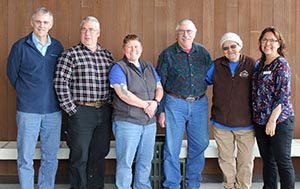
Schantz (fourth from left), board members, staff, and legislative monitors who met with Juneau policy makers in March, were invited to lunch with former board member, now governor of Alaska, Bill Walker. Photo courtesy of the office of Governor Bill Walker.

Donna Schantz, long-time staff member, has been named as the council’s new executive director. Schantz had been serving as the acting executive director since the retirement of Mark Swanson, in November of last year.

“The council is very fortunate to have someone with Donna’s organizational knowledge and history to lead us into the future” said Amanda Bauer, president of the council’s board of directors. “I am confident her commitment to our mission and her demeanor will significantly strengthen relationships within the council, as well as with our industry and regulatory partners, as these positive relationships are a critical component to achieving our mission.”

Schantz joined the council staff in 1999 and served as director of programs since 2001. She is a graduate of Providence College in Rhode Island. Schantz previously served as acting executive director in 2009 after the retirement of John Devens.

Read more

Wrede joining council staff; Changes in Anchorage office

Walt Wrede will be joining the council’s staff as Director of Administration. He most recently worked as city manager of Homer, where he served for over 12 years. Before that, he served the Lake and Peninsula District in southwest Alaska as borough manager from 1994-2002, and as city planner for Cordova from 1990-1994. A significant component of Wrede’s job in Cordova was helping the community adjust to the social, economic, and environmental impacts associated with the Exxon Valdez oil spill. He has a master’s degree from Washington State University, and a bachelor’s from Monmouth University, both degrees are in sociology.

“I am excited and encouraged to have Walt join our team” said Donna Schantz, executive director of the council. “Walt has a broad background in organizational planning, policy development and financial management, and comes with a glowing reputation as an effective leader and collaborator. Walt’s experience, coupled with his understanding of the council’s mission and strong appreciation for the nature and beauty of Prince William Sound, makes him a near-perfect fit.”

Wrede’s first day with the council will be May 23, and he will be based out of the council’s Anchorage office.

Read more

From the Executive Director: Proposed amendment to Alaska’s Response Plan would reduce citizen involvement in spills like Exxon Valdez

Donna Schantz
Donna Schantz

The federal and state group that plans oil-spill response and cleanup in Alaska waters has proposed changes that would dismantle a vital tool for public involvement in that process.

The group in question is the Alaska Regional Response Team. This group is made up of 15 different federal and state agencies, and is chaired by the U.S. Coast Guard and the Environmental Protection Agency. The Department of Environmental Conservation is the primary representative for the State of Alaska.

Changing it as proposed would weaken, not strengthen, oil-spill response in Alaska waters. It’s a bad idea and we urge the Response Team to withdraw the proposal and rework it as needed with help from this citizens organization and other concerned stakeholders.

The tool the Response Team wants to dismantle is the Regional Stakeholder Committee. It includes our group and many others with much to lose if Alaskans should suffer another spill on the scale of the Exxon Valdez. The proposed change would replace the Stakeholder Committee with two smaller, weaker groups that would be far less effective, possibly to the point of near-irrelevance.

Read more

Skip to content