
Electric current can find damage in underground liners

A new Council report shows how electricity can be used to “see” damage in the asphalt liners that are intended to contain oil in case of a spill at the Valdez Marine Terminal. The terminal’s vast crude oil storage tanks are surrounded by a secondary containment system. This system consists of huge containment cells (two … Read more

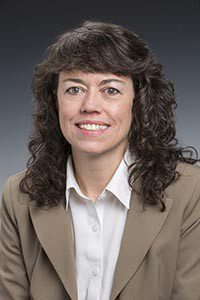
Matt Cullin builds life of growth and success out of expertise in corrosion and failure analysis

Volunteer Spotlight

Cullin is a member of the Terminal Operations and Environmental Monitoring Committee. Volunteers like Cullin dedicate their time and expertise on committees who advise the Council’s Board of Directors on technical issues related to the safe transportation of oil through Prince William Sound.

At his job as the director of the University of Alaska Anchorage’s BP Asset Integrity and Corrosion Lab, Matt Cullin imagines himself as a detective.

“I do a lot of failure analysis work for the oil and gas industry,” he says. “Basically when stuff breaks, we do the CSI forensics to figure out why things broke and why they failed.”

They get big projects and a lot of smaller failures too. “Every couple of months somebody shows up with an old piece of pipe and asks us to tell them what happened.”

His goal isn’t just to solve the crime, though, he wants to learn how to prevent corrosion. For all of these projects, Cullin says his next question is always “how can you keep it from failing in the first place?”

Volunteering for the Council

Cullin also puts his background in mechanical engineering with a specialty in corrosion, materials, and failure analysis into use for the Council as a member of the Terminal Operations and Environmental Monitoring, or TOEM, Committee. He says working with the committee helps him better understand the pipeline and terminal. The students in his classes at UAA benefit too.

“Students have a lot of questions about the pipeline and the terminal,” Cullin says. “These are engineers who might go to work for the state or Alyeska and for them to have that information before they graduate is pretty neat. It’s not a given, when you get a university degree, that you’ll get to study this applied information that’s relevant to your local installation.”

“It’s a cool symbiotic relationship,” he adds.
Read more

Schantz: Collaboration leads to better solutions for prevention and response

Photo of Donna Schantz
Donna Schantz

By Donna Schantz
Executive Director

The Oil Pollution Act of 1990 notes congressional findings from the Exxon Valdez oil spill. Included in those findings was the need to foster the long-term partnership of industry, government, and local communities. This is a key piece of the foundation on which the Council was formed.

The Council may not always agree with industry and regulators, but we strive to maintain positive working relationships and build trust. While we do not hesitate to raise concerns when we perceive potential rollbacks in oil spill prevention and response safeguards, it is just as important to recognize when we are in agreement.

I am pleased to report the Council will be supporting Alyeska in a recent appeal they filed with the Environmental Protection Agency (EPA) (page 2). Our independent review verifies that systems Alyeska currently has in place at the Valdez Marine Terminal capture over 99% of the emissions addressed by the rule – a higher reduction goal than is currently being required. The Alaska Department of Environmental Conservation (ADEC) has also voiced support of Alyeska’s appeal to the EPA.

This collaborative approach goes both ways. For example, after months of coordination, Alyeska has also agreed to support a project proposed by the Council to look at the chemical composition and concentration of oxygenated hydrocarbons released from the terminal. Oxygenated hydrocarbons are less studied than other hydrocarbon products and they are potentially toxic in the aquatic environment. Revisions to the scope of work were necessary to satisfy Alyeska’s concerns, mostly related to COVID impacts and their desire to focus resources on their priority operational goals. This is another example of how good communication, strong relationships, and a willingness to work together can lead to solutions that support everyone’s goal of moving oil safely.

Read more

Council supports Alyeska’s appeal to EPA

In late 2020, Alyeska Pipeline Service Company appealed a July 2020 Environmental Protection Agency air quality rule that would regulate emissions from the crude oil storage tanks at the Valdez Marine Terminal. Alyeska asserted that the new rule would not result in emissions reductions at the terminal, that local residents would not see air quality … Read more

Skip to content