The Prince William Sound Regional Citizens’ Advisory Council is encouraging individuals, partners, and/or member entities to write a support letter encouraging Governor Dunleavy to sign Senate Bill 174 to establish an Alaska Invasive Species Council. This proposed law would develop a coordinated plan to respond to invasive species threats in Alaska. You will find information and suggestions to help you craft a letter in the resources below.
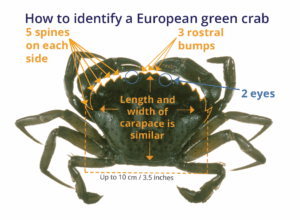
Much like oil spills, an ounce of prevention is worth a pound of cure. We need only look at the impacts of invasive species in other states and the extent of resources required to manage them. Alaska is in a unique place to improve biosecurity before more serious impacts are realized.
About Senate Bill 174
Senate Bill 174 establishes an Alaska Invasive Species Council comprised of a diverse and modest number of members to serve in an advisory role for invasive species management across agencies and jurisdictional boundaries.
The Alaska Invasive Species Council improves State efforts to proactively define, prevent, and rapidly respond to invasive species by bringing together stakeholders from across disparate agencies, user groups, and industry.
Bipartisan support for the bill
The bill received strong bipartisan support, passing in the Senate unanimously and receiving 35 yea votes in the House. The bill gained sponsorship from 15 Senators and 11 Representatives, clearly indicating broad and bipartisan awareness of the need for robust collaboration and State engagement in invasive species prevention and management for the benefit of Alaska’s environment, economy, and culture.
Where to send your letter
Note that time is of the essence, as the bill sponsor hopes to have the legislation transmitted to the Governor’s office in the near future. When that happens, the Governor will have 15 days, not counting Sundays, to sign, veto, or let the bill become law without his signature. The 15-day clock will be in effect since the Legislature is in Special Session. It is strongly suggested that any letters be transmitted no later than June 11, 2026.
Send via email to the following:
- Tyson Gallagher, Chief of Staff, Office of the Governor tyson.gallagher@alaska.gov
- Jordan Shilling, Legislative Director, Office of the Governor jordan.shilling@alaska.gov
Resources for writing your letter
- Full text of Senate Bill 174 (PDF)
- Sample Support Letter Content (below)
- Sponsor Statement from Senator Forrest Dunbar (Bill Sponsor) (PDF)
- Talking Points from the Alaska Invasive Species Partnership (PDF)
- PWSRCAC’s letter of support (PDF)
Sample support letter content and outline
Send via email to the following:
- Tyson Gallagher, Chief of Staff, Office of the Governor tyson.gallagher@alaska.gov
- Jordan Shilling, Legislative Director, Office of the Governor jordan.shilling@alaska.gov
[DATE]
The Honorable Mike Dunleavy
Office of the Governor
P.O. Box 110001
Juneau, Alaska 99811
SUBJECT: Support for Senate Bill 174 to establish an Alaska Invasive Species Council
Dear Governor Dunleavy,
Opening statement
- Insert information about you, or the organization writing the letter, and why this issue is important to you/the organization.
- Express strong support for signing Senate Bill 174 into law. The full name of the bill is: SB 174: “An Act establishing the Alaska Invasive Species Council in the Department of Fish and Game; relating to management of invasive species; and providing for an effective date.”
- The bill received strong bipartisan support, passing in the Senate unanimously and receiving 35 yea votes in the House. The bill gained sponsorship from 15 Senators and 11 Representatives, clearly indicating broad and bipartisan awareness of the need for robust collaboration and State engagement in invasive species prevention and management for the benefit of Alaska’s environment, economy, and culture.
Why creating an Alaska invasive species council is important
- Invasive species pose a significant threat to Alaska’s economies, ecosystems, culturally significant ways of life, as well as resources relied on for food security, harvest, recreation, and tourism.
- Invasive species can increasingly survive, spread, and cause harm in Alaska due to warming oceans and habitat disturbance.
- The spread and impacts of invasive species outpace updates to policies and regulations, and investment in management.
- Alaska lacks an invasive species council to shape policy, prepare plans, and define actions for state agencies to proactively mitigate concerns. Note that invasive species councils have proven to be effective in at least 18 states in the U.S., including at least 10 other western states.
What SB 174 does:
- Establishes an Alaska Invasive Species Council comprised of a diverse and modest number of members to serve in an advisory role for invasive species management across agencies and jurisdictional boundaries.
- The Alaska Invasive Species Council will improve State efforts to proactively define, prevent, and rapidly respond to invasive species by bringing together stakeholders from across disparate agencies, user groups, and industry.
- The Alaska Invasive Species Council will serve in an advisory role and establish consistent approaches across our state agencies.
- SB 174 also requires the preparation of a 5-year strategic plan, an annual update to the legislature, and establishes an invasive species response fund.
- The Alaska Invasive Species Council does not have authority to direct agencies or funding but would elevate the conversation on invasive species while building awareness at higher levels of government.
Closing Message:
- Express thanks for the Governor’s commitment to protecting Alaska’s natural resources.
- For years, the Governor has signed a proclamation recognizing the second full week of June as Alaska Invasive Species Awareness Week. While this is a good first step towards building awareness, the creation of the Alaska Invasive Species Council is critical to leverage resources of the state and stakeholder engagement to help prevent invasions and facilitate rapid respond to a threat.
- Restate the request to sign Senate Bill 174 into law to develop a coordinated plan to respond to invasive species threats in Alaska.
- Express appreciation for consideration of this request.
About the Council’s invasive species program
The Council has a 25-year history of working to prevent the introduction of invasive species into the marine environment in the Exxon Valdez oil spill region, which includes Prince William Sound, lower Cook Inlet, and the Kodiak archipelago. Our primary concern is the introduction of invasive species from ballast water and biofouling as a result of Trans-Alaska Pipeline System tanker operations. We have been successful, along with partners in Alaska, in addressing this issue by funding research projects to sample the ballast water of tankers, engaging in various working groups, and supporting changes in Federal regulations such as the Vessel Incidental Discharge Act (VIDA). In addition, PWSRCAC maintains an active early detection monitoring program for marine invasive species, including European green crab, in the communities of Valdez, Whittier, Cordova, and Kodiak.
More about our work: Marine Invasive Species