By Donna Schantz, Executive Director
Since 2016, there has been an increase in foreign flagged tankers loading Alaska North Slope crude oil from the Valdez Marine Terminal, or VMT. While foreign flagged ships are crewed by licensed and professional mariners, these vessels may introduce increased risk of an accident or oil spill due to the lack of familiarity with the unique environmental conditions or prevention and response systems in our region.
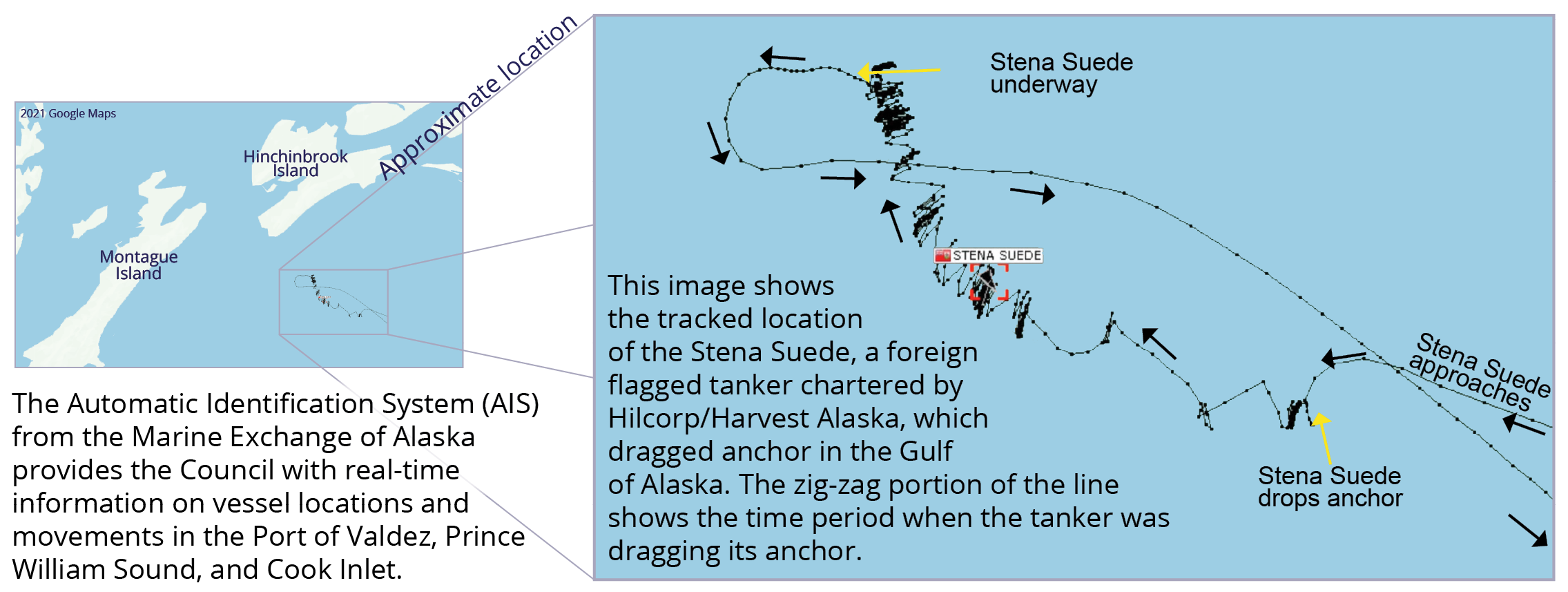
A lack of familiarity with the operating environment appears to have been the cause of an incident in the Gulf of Alaska on April 14 with the foreign flagged tanker, Stena Suede. This unladen vessel arrived ahead of its estimated time to load oil at the VMT, with other tankers scheduled ahead of it.
Instead of the customary response in this situation – picking up a marine pilot at the Bligh Reef station and proceeding to the only designated safe anchorage for large vessels in our region at Knowles Head – the Stena Suede decided to hold off in the Gulf of Alaska. When the winds started to pick up, the crew dropped anchor about 20 miles outside of Hinchinbrook Entrance. Subsequently, they were unable to pull up the anchor due to damaged equipment and the vessel proceeded to drag anchor for more than 24 hours, losing some mooring equipment as well. Once the crew made repairs, they proceeded to the VMT, loaded oil, and left without any further issues.
 Do you know if you or your community is prepared to advocate for themselves in the case of an oil spill? The Council recently developed resources to support affected stakeholders during such an event.