Out-of-service buoy and winter storms raise concerns

An out-of-service buoy and a series of recent storms have combined to raise concern at the Council about tanker transit procedures during period with the high wind speeds and wave heights in which tankers are allowed to travel through Prince William Sound.

Seal Rocks buoy out of service


From May until December of 2018, a critical buoy located near Hinchinbrook Entrance was out-of-service. This buoy, referred to as “Seal Rocks buoy,” collects wind speed and wave height data. That information is used by the U.S. Coast Guard to make decisions as to whether Hinchinbrook Entrance is open or closed to outbound laden oil tanker traffic. When this buoy is inoperable, the U.S. Coast Guard uses data from two nearby buoys, Cape Cleare and Cape Suckling, along with reports from Edison Chouest Offshore, or ECO, tug crews that are sent out to observe wind and waves to make Hinchinbrook Entrance open and closure decisions.

In November and December, several winter storms came through Prince William Sound that raised concern about these alternate methods for reporting weather conditions at the Entrance.
Read more

30 years after Exxon Valdez


NEW: 35 years after Exxon Valdez


How has oil transportation changed in Prince William Sound since 1989?

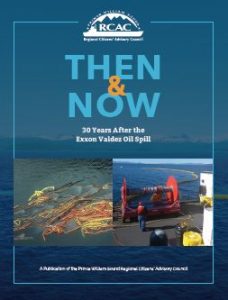
Image of cover of Then and Now 30 Years After the Exxon Valdez Oil Spill
Read more about the changes and remaining concerns in our new publication: Then and Now: 30 Years After the Exxon Valdez Oil Spill (PDF)

The immediate cause of 1989 Exxon Valdez oil spill was a navigational error on the part of the tanker’s captain and crew. However, Congress found that complacency among the oil industry and the regulatory agencies responsible for monitoring the operation of the Valdez terminal and vessel traffic in Prince William Sound was also a contributing factor in the disaster.

Few prevention measures were in place and cleanup resources were inadequate.

Since 1989, regulatory agencies, the industry, and citizens have been working together on improved methods to prevent oil spills and how to be better prepared to clean up if another spill should occur.

Laws and Regulations

One of the most important results of the oil spill was the enactment of the federal Oil Pollution Act of 1990, or “OPA 90,” which addressed many deficiencies, including liability, compensation, and oversight. The law required two citizens’ oversight councils, one for Prince William Sound and one for Cook Inlet.

Both federal and state laws now require more comprehensive prevention measures and planning for larger spills and require more spill response equipment to be immediately available.

Read more

Drills test new response equipment and personnel

Exercises required for marine transition

A series of drills and exercises, including one large no-notice drill, helped assess the new system in Prince William Sound.

Throughout the past year, Alyeska conducted a series of exercises designed to meet requirements from the Alaska Department of Environmental Conservation and train the crews aboard Edison Chouest Offshore’s new vessels. Some exercises were conducted during windy conditions and others during darkness.

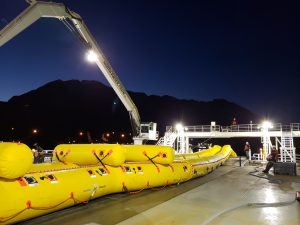
Photo of crews practicing oil spill response at night.
The Council believes safely incorporating realistic challenges into drills and exercises increases safety during a real response. This photo from a July 2018 exercise shows how response crews practice deploying oil spill boom at night.

In June, the department approved major amendments to the oil spill contingency plans for the Valdez Marine Terminal and the tankers that transport oil through Prince William Sound. These amendments stemmed from the change of spill prevention and response contractors to Edison Chouest Offshore, who took over from Crowley Maritime last July. The approval came with conditions, which required specific exercises and training for the new equipment and personnel.

The department required each of the five escort tugs, the four general purpose tugs, and the Ross Chouest utility tug to conduct exercises with oil spill response barges. In addition, the department specified that some of these exercises had to occur in winds of at least 20 knots (23 miles per hour) and in darkness.

Read more

Community Corner: Council fosters pathways to engaged citizens

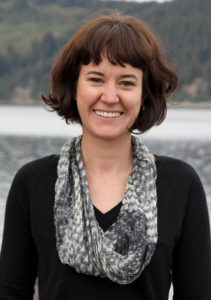
By Betsi Oliver
Outreach Coordinator

What makes the difference between youth who develop careers and other roles protecting our ecosystem versus those who don’t?

When youth develop a personal connection to the outdoors, an understanding of and interest in science, and civic engagement experience, they develop into young adults who are engaged, informed, and passionate.

In previous jobs I implemented youth education programs that were supported by the Council. As a mentor for the young participants, I saw that a web of interconnected experiences provides a strong foundation for their development. For a young person, finding a next step gives meaning to the fun field trip they did in elementary or middle school, turning it into their context for participating in Science Bowl, an internship, a volunteer effort, or an academic path.

Read more

Skip to content